Start with one shared transportation brief
The strongest event transportation plans begin with one accurate brief rather than a long chain of separate messages. Before we can confirm a suitable vehicle, route, timing, price, and availability, we need the event date, every complete address, guest count, pickup locations, required arrival time, event end time, luggage or equipment needs, accessibility considerations, and the person authorized to approve changes.
For a concert, gala, conference, private party, or wedding, identify whether everyone travels together or in waves. A Toronto event with guests arriving from Etobicoke, Oakville, Hamilton, or Niagara may require separate pickup zones, different departure times, and more than one vehicle. Give us one master itinerary and one primary contact, then give guests a shorter version containing only the details they need.
A useful brief distinguishes confirmed details from working assumptions. Mark passenger counts, venue entrance instructions, and return timing as confirmed only when the organizer has verified them. This prevents an early estimate from becoming an unchallenged day-of instruction.
- Event date, venue name, and complete pickup and destination addresses.
- Guest count by pickup location, vehicle, and departure wave.
- Required arrival time, not only the advertised event start time.
- Luggage, equipment, mobility aids, or oversized items that affect vehicle fit.
- One primary organizer and one backup decision-maker with mobile numbers.
| Brief item | Why it matters |
|---|---|
| Required arrival time | It determines the departure window and route allowance. |
| Pickup groups | It helps us assess whether one vehicle or coordinated waves are more practical. |
| Venue entrance | It prevents guests from being dropped at an unusable or distant access point. |
Build the schedule around windows, not exact minutes
An event itinerary should use practical time windows. A note such as “vehicle arrival between 5:15 and 5:30 p.m.” is usually more helpful than promising that every passenger will be collected at one exact minute. Each pickup should state the meeting point, passenger-readiness time, latest departure time, and a backup instruction if the curb is blocked or guests cannot locate the vehicle.
Separate the required arrival time from the event start time. Guests may need time for registration, coat check, security screening, seating, photographs, or a pre-event meal. If a gala begins at 7:00 p.m., an appropriate transportation target may be 6:15 p.m. rather than 6:55 p.m.
Build the schedule backward from the arrival deadline. First allow time at the venue, then route allowance, boarding and loading time, and a reasonable buffer. The result is a planning window, not a guarantee of a fixed travel time. Traffic conditions, road work, weather, venue congestion, and passenger readiness can all affect movement on the day.
- Use a readiness time earlier than the latest departure time.
- Include a named meeting point, such as a hotel lobby, side entrance, or designated curb.
- Give late passengers one clear instruction instead of asking the entire group to guess what happens next.
Choose vehicles by movement pattern, not appearance
Vehicle selection should follow the itinerary. The key question is not simply which vehicle looks appropriate; it is whether it can accommodate the confirmed passenger group, luggage, equipment, pickup geography, and venue access requirements. Our fleet guide can help organizers compare vehicle categories before requesting a booking confirmation.
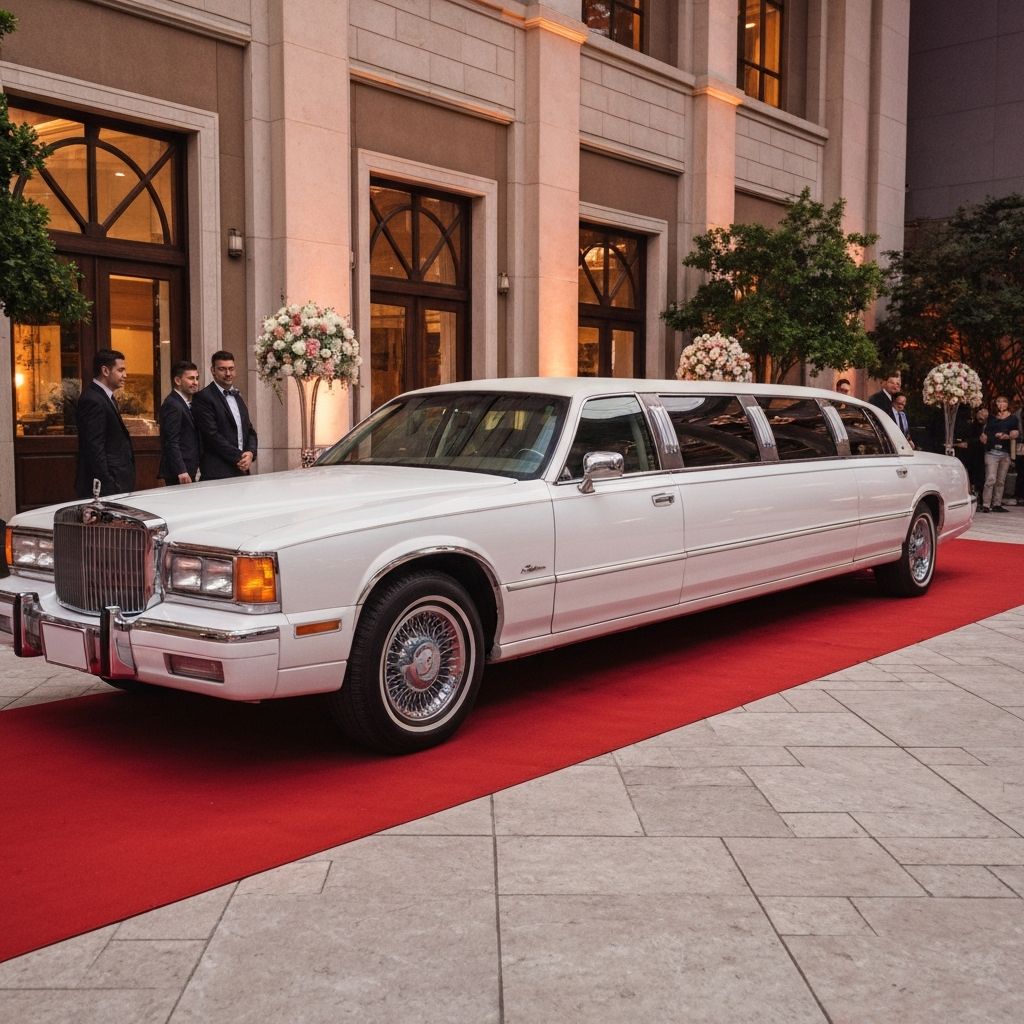
A luxury SUV may suit a small executive group, family transfer, or compact event party. A Sprinter may be more practical when guests need to remain together or when the itinerary includes several coordinated stops. A stretch limousine or party transportation option may fit a celebration, but the organizer should still confirm passenger fit, luggage expectations, route restrictions, and boarding conditions before booking.
Avoid assigning a vehicle from a total guest count alone. Ten guests leaving from one hotel may move differently than ten guests collected from five homes. The number of stops, amount of luggage, ability to board quickly, and whether the venue permits larger vehicles can change the practical assignment.
- Match each vehicle to a passenger list and pickup wave.
- Record luggage and equipment separately from passenger count.
- Confirm whether the venue has restrictions on vehicle size, driveway access, or staging.
- Keep a small attendance change from disrupting the whole transportation plan by updating the passenger list promptly.
| Movement pattern | Planning consideration |
|---|---|
| One pickup, one venue | Prioritize group fit, luggage capacity, and boarding time. |
| Several homes or hotels | Prioritize pickup order, readiness times, and route coordination. |
| Celebration with late finish | Prioritize a visible return meeting point and departure waves. |
Coordinate the venue and curb before event day
Venue access is often the detail organizers discover too late. Ask where vehicles may load and unload, whether a driveway or loading bay must be reserved, whether a traffic marshal is required, and whether guests should walk from a nearby meeting point. Confirm the entrance name, not merely the street address.
The City of Toronto’s event-planning guidance identifies site or route maps, emergency access, nearby construction, traffic congestion, transit, driveways, businesses, and residences as factors that can affect event movement. Its congestion-management and traveller-information resources also show why organizers should check for planned closures and changing road conditions before the event.
For airport-connected events, use the designated procedures applicable to the terminal and transportation type. Toronto Pearson provides pre-arranged-service pickup guidance, and its accessibility information advises travellers to communicate mobility-aid requirements with their transportation provider. Share these needs early so they can be considered as part of the itinerary rather than handled at the curb.
- Confirm the legal or venue-approved loading and unloading point.
- Ask whether drivers may wait, circle, or stage nearby if guests are delayed.
- Review planned construction, lane closures, and special-event restrictions close to the event date.
- Keep emergency access clear and do not treat a loading bay as guaranteed without venue confirmation.
Create a communication chain guests can actually follow
Guests should receive only the information they need: their pickup time window, meeting point, organizer contact, and what to do if they are delayed. Vehicle-identification details can be shared when confirmed. Avoid sending the entire operational itinerary if it includes private residential addresses or instructions that do not apply to every passenger.
Assign three roles: the transportation lead, the venue lead, and the guest lead. The transportation lead communicates with us about the itinerary. The venue lead confirms the approved access and curb procedure. The guest lead gathers passengers, checks readiness, and reports material delays. One person may hold more than one role for a small event, but every responsibility should be assigned by name.
Use one final guest message shortly before the event. It should repeat the date, readiness time, meeting point, return plan, and the contact to call if a passenger is separated from the group. A concise, consistent message is easier to follow than several partial updates.
- Transportation lead: approves changes and communicates the final itinerary.
- Venue lead: confirms entrances, loading rules, and collection locations.
- Guest lead: manages passenger readiness and last-minute attendance changes.
- Guests: receive only their relevant pickup and return instructions.
Plan the return trip before the event begins
Return transportation is often more difficult than the outbound trip because guests leave at different times, the event may finish late, and the original curb can be crowded. Decide in advance whether the return is one fixed departure, several scheduled departures, or a flexible arrangement subject to confirmation. For conferences and galas, staged departures may work well. For concerts and parties, a clear meeting point and several departure waves may be easier to manage than asking vehicles to wait indefinitely.
Ask the venue where vehicles should collect guests after the event. Make that location visible in the guest message and identify a responsible person who remains there until the final group departs. If guests may separate during the evening, record who is travelling together and who has authority to change the plan.
A return plan should also state what happens if the event runs late. Confirm the decision point: for example, whether the organizer will notify the transportation lead, whether passengers should remain at the designated meeting point, and whether an altered schedule requires reconfirmation. Clear instructions reduce confusion when the event ends differently than expected.
- Set fixed or staged departure times before guests arrive.
- Use one visible, venue-approved return meeting point.
- Name the person who stays with the final departing group.
- Document the procedure for late finishes and changed passenger groups.
Use the 5P test before you request a quote
Before requesting a quote from a GTA limousine service, use five checks: People, Places, Pace, Payload, and Point person. This framework helps turn a general event idea into details we can assess for the specific booking.
People means confirmed passengers by vehicle and departure wave. Places means every pickup, venue entrance, staging location, and return point. Pace means readiness times, arrival deadlines, loading windows, and event finish timing. Payload means luggage, equipment, mobility aids, and oversized items. Point person means the individual authorized to make a day-of decision.
If one of the five categories is unknown, the plan may still be workable, but it should be identified as an open item rather than assumed. That makes it easier for us to clarify the itinerary before vehicle assignment and helps the organizer avoid last-minute changes that affect the group.
- People: Who is travelling in each vehicle and wave?
- Places: Where are all pickups, entrances, and return points?
- Pace: What are the readiness, departure, and arrival windows?
- Payload: What must fit besides passengers?
- Point person: Who can approve a change on event day?
The 5P Event Transportation Test
Before requesting a final quote, confirm People, Places, Pace, Payload, and Point person. If one category is unknown, identify it as an open item before vehicle assignment.
A simple pickup-window calculation
Planning allowance = boarding time + loading time + route allowance + event buffer. Example: 5 minutes boarding + 8 minutes luggage loading + 35 minutes route allowance + 20 minutes buffer = 68 minutes of planning allowance. This is not a guaranteed travel time.
Plan your event transportation with Toronto A1 Limo. Submit your itinerary through our booking page or contact us at 647-386-3868.