The short answer: choose for the whole itinerary, not just the passenger count
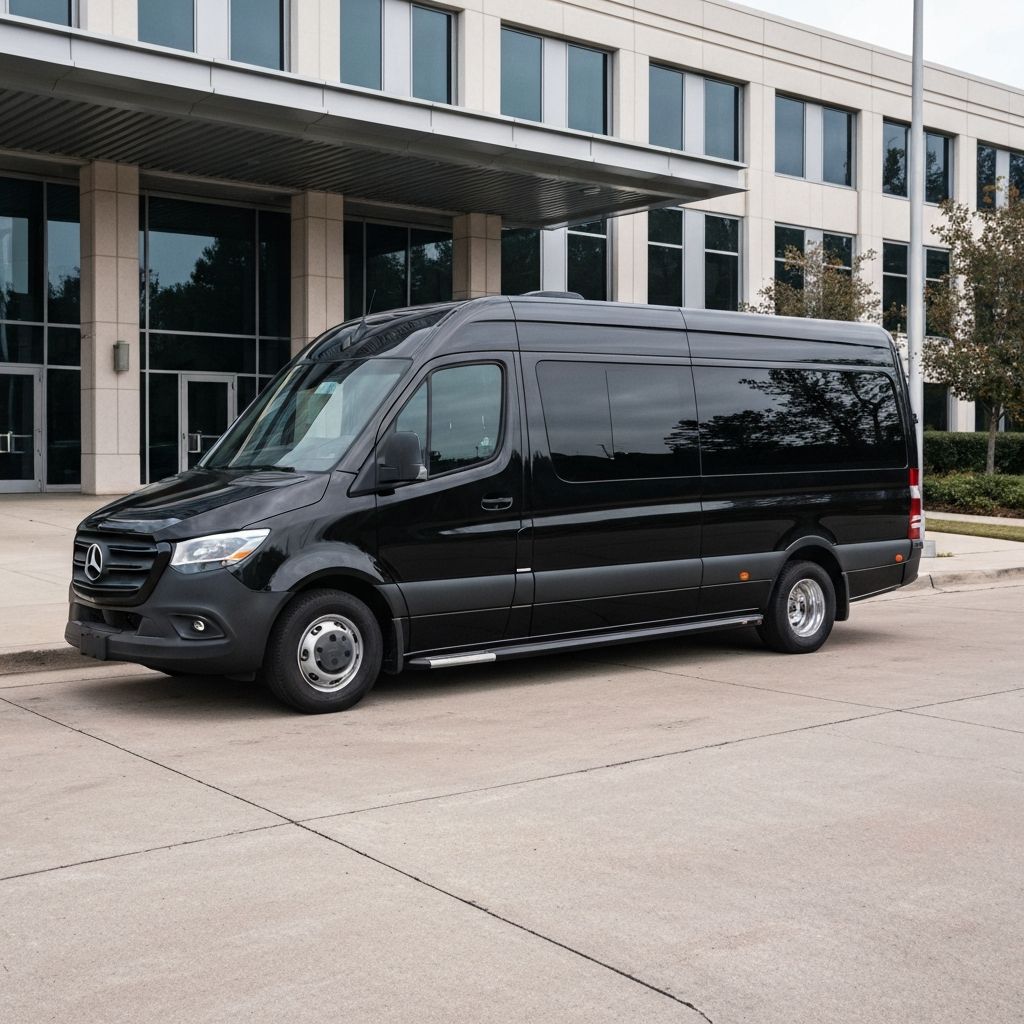
For a regional Ontario trip, a private car is usually the simplest choice for one or two travellers with light luggage and few stops. A luxury SUV is often the more practical middle ground when passengers need additional luggage flexibility, a higher seating position, or room for shopping, child equipment, or a longer day on the road. A Sprinter may be the better category when a group needs to remain together, has substantial luggage or equipment, or expects several stops during one itinerary.
The important qualification is that vehicle categories do not replace a booking review. Toronto A1 Limo lists Cadillac Escalade, Chevrolet Suburban, GMC Yukon XL, Mercedes Sprinter, stretch limousine, and party-bus options, but the requested vehicle, route, timing, and availability must be confirmed for each booking. We recommend describing the real load—people, bags, equipment, stops, and accessibility needs—rather than asking only for a model name.
- Private car: best for a small group, light luggage, and a straightforward point-to-point journey.
- Luxury SUV: useful for a small group with more luggage, equipment, or a longer regional itinerary.
- Sprinter: worth considering when the group, luggage, or itinerary is large enough that splitting passengers would create inconvenience.
1. Start with passengers, but do not stop there
The first calculation is straightforward: count every traveller who will be in the vehicle, including children. Then identify who needs easier boarding, additional personal space, or a particular seating arrangement. A group of four adults with small carry-on bags may have very different needs from four adults travelling with winter coats, golf clubs, shopping bags, or checked luggage.
For children, ask about the child seat or booster-seat plan before confirming the vehicle. Transport Canada advises that children should continue using a booster when the seat belt does not fit snugly across the hips and properly across the shoulder. It also advises that bulky winter clothing can affect belt fit, so the lap belt should be positioned underneath the jacket and tightened appropriately. These are planning considerations, not a substitute for confirming the individual child’s requirements and the applicable Ontario rules. (tc.canada.ca)
2. Treat luggage as a shape-and-volume problem
Luggage often changes the practical answer more than one additional passenger. A hard-sided suitcase, golf bag, stroller, musical instrument, presentation case, or several shopping bags may not use space efficiently. Bags also need to be secured without obstructing passengers or creating an awkward loading arrangement.
Before booking, make a short inventory. Separate standard suitcases from irregular items, then note whether anything must remain upright, protected, or immediately accessible. For airport travel, include both checked bags and carry-ons. For golf transportation, list the number of golf bags and whether passengers will also carry personal luggage; our golf transportation page is a useful starting point for that discussion.
3. Match the vehicle to the itinerary structure
A point-to-point ride is easier to plan than a day involving several destinations. Regional Ontario travel may combine Toronto, the airport, Oakville, Hamilton, Niagara Falls, St. Catharines, Brantford, or another community. The number of stops affects how much boarding, unloading, waiting, and luggage movement the group will manage.
For one direct transfer, choose the smallest category that can accommodate the confirmed passengers and luggage comfortably. For a day trip with multiple stops, consider whether passengers will remain in the vehicle between visits, whether bags will stay onboard, and whether the group needs a consistent meeting point. A larger vehicle can be helpful for group coordination, but it is not automatically the best answer for every itinerary.
4. Consider Ontario road and seasonal conditions
Regional travel should be planned with the road environment in mind. Ontario advises travellers to check forecasts and Ontario 511 for current road conditions, closures, and highway information. The province also notes that winter driving can be unpredictable and recommends slowing down, leaving additional space, and using appropriate winter tires. (ontario.ca)
These recommendations do not mean a particular vehicle will be faster or that a trip will operate on a guaranteed schedule. They do mean your booking conversation should include the season, departure window, route, and any time-sensitive connection. A winter itinerary with a fixed appointment may justify more schedule margin than a flexible sightseeing day.
5. Compare privacy, comfort, and group cohesion
Vehicle selection is also about how people will use the time between stops. A private car may suit a quiet airport transfer or executive journey. An SUV can offer a more spacious feel for a small family or group. A Sprinter may make it easier for a larger party to remain together rather than coordinating multiple cars.
For business travel, consider whether passengers need to review documents, make calls, or arrive together. For families, think about tired children, coats, snacks, and the number of times people will board and leave. For a wedding, golf outing, or regional celebration, the group may value shared travel and simpler coordination more than the smallest possible vehicle.
6. An original vehicle-selection scorecard
When two categories appear suitable, score each one before booking. Give the vehicle one point for every requirement it clearly satisfies after confirmation. This prevents a familiar model name from overshadowing the actual itinerary.
Use these six questions: Can all passengers travel together? Can every bag and irregular item be accommodated? Will passengers remain comfortable for the full route? Does the vehicle suit the number of stops? Can children or passengers with specific boarding needs be handled as planned? Does the category leave reasonable flexibility if one item or passenger is added?
Six-question vehicle scorecard
Score each vehicle category against group cohesion, luggage fit, full-route comfort, stop practicality, child or boarding needs, and flexibility for changes. Five or six positive answers indicate a strong starting match, subject to confirmation.
The real load calculation
Passenger count + luggage types + irregular equipment + number of stops + fixed deadlines = the information needed for a practical vehicle recommendation. Example: 4 adults, 1 child, 7 bags, 1 stroller, and 3 stops should be compared as an itinerary, not simply as five passengers.
Describe your passengers, luggage, equipment, stops, and timing, then request a date-specific recommendation from Toronto A1 Limo at /book or 647-386-3868.