Start with one event transportation brief
Before requesting a GTA limousine service quote, create one written transportation brief. Include the event date, venue, passenger count, pickup points, luggage or equipment, required arrival time, return plan, and one day-of contact. Keeping these details in one document prevents important decisions from being scattered across guest texts and separate emails.
We recommend organizing the brief around four questions: who is travelling, where they are going, what they are bringing, and when each movement must happen. This gives us the information needed to discuss an appropriate vehicle category, route sequence, booking structure, timing, and availability.
Begin with the itinerary rather than a vehicle name. A luxury SUV, Mercedes Sprinter, stretch limousine, or party bus can each suit different plans, but the correct choice depends on the full passenger, baggage, venue-access, and schedule picture.
- Event date, event name, required arrival time, and return window.
- Complete pickup and destination addresses, including requested entrances.
- Passenger count, guest groups, and the intended pickup sequence.
- Luggage, equipment, accessibility considerations, and one authorized day-of contact.
Confirm venue access and the route approach
Use exact addresses rather than venue names alone. A hotel, convention facility, arena, or entertainment complex may have multiple entrances, loading areas, and passenger zones. Record the preferred entrance, the on-site venue contact, and any instructions for commercial-vehicle access or waiting.
Ask the venue directly about passenger loading, staging, waiting, and restricted approaches. These operating details may change by building, event, or time of day, so a previous visit is not enough to confirm the plan. If guests start in different GTA municipalities, compare the pickup sequence with the arrival requirement before deciding whether one vehicle movement is practical.
October event schedules can affect the area around a venue. Destination Toronto’s event calendar can help organizers review nearby event activity by date, category, and location. Ontario’s official road map is useful for broader regional context, but it does not replace current venue instructions or a final route review close to departure.
- Confirm the exact venue entrance and passenger-loading instructions.
- List photo stops, hotel stops, or other planned destinations separately.
- Avoid assuming that a vehicle can wait or stage at the curb.
- Recheck venue directions and regional travel context near the event date.
Choose the vehicle category from the actual group need
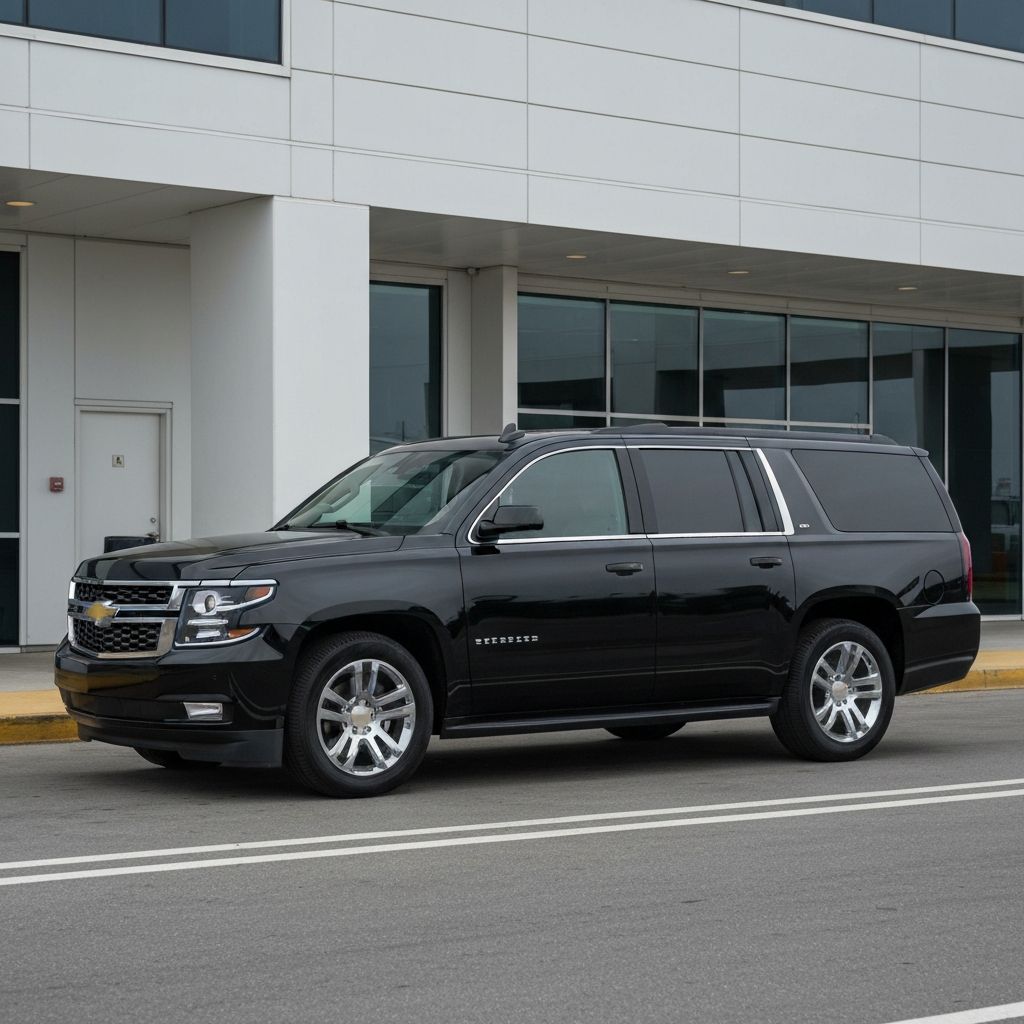
Our listed fleet categories include Cadillac Escalade, Chevrolet Suburban, GMC Yukon XL, Mercedes Sprinter, stretch limousine, and party-bus options. We use these categories as a discussion starting point. The confirmed vehicle must be evaluated against the passenger count, luggage, itinerary, stops, route, date, and availability.
A luxury SUV may suit a smaller group with a direct transfer and limited bags. A Mercedes Sprinter may be worth discussing when more passengers need to remain together or when the itinerary includes coordinated stops. A stretch limousine or party bus may suit a celebration-focused schedule, provided the seating arrangement, storage needs, venue access, and actual itinerary have been reviewed.
Do not treat passenger count as the only capacity question. Guests carrying suitcases, garment bags, instruments, floral items, sports gear, production cases, or décor may require a different plan from the same number of guests carrying only personal bags.
- Compare passenger comfort as well as seat count.
- Treat luggage and equipment storage as a separate requirement.
- Consider how often guests will board and exit during the itinerary.
- Confirm the specific vehicle before relying on a general category description.
| Group situation | Key planning question | Starting point for discussion |
|---|---|---|
| Small group with a direct transfer | How many passengers and bags are travelling? | Discuss a luxury SUV after confirming passenger and luggage needs. |
| One group travelling together | Will everyone board at one point or at several pickups? | Discuss a Mercedes Sprinter when the group size and itinerary support it. |
| Celebration with planned stops | What seating, storage, and venue-access requirements apply? | Discuss a stretch limousine or party bus after reviewing the complete itinerary. |
| Group carrying bulky items | What must be loaded, protected, and unloaded? | Confirm item dimensions and storage requirements before selecting a category. |
Build timing backward from the required arrival
Driving time is only one part of a group schedule. Guests need time to gather, board, load bags, confirm attendance, and approach the correct venue entrance. Build the plan backward from the required arrival instead of forward from the preferred pickup time.
Use a simple calculation for each movement: planned departure equals required arrival minus estimated travel time minus a loading and coordination buffer. For example, a 6:30 p.m. required arrival, 45 minutes of estimated travel, and a 20-minute coordination buffer results in a planned 5:25 p.m. departure. This is a planning tool, not a travel-time guarantee.
Give guests separate ready, boarding, and departure times. A message that asks guests to be in the lobby by 5:05 p.m., begin boarding at 5:10 p.m., and depart at 5:25 p.m. creates a manageable window without consuming the full travel buffer.
When GO Transit is part of an attendee’s connection or backup plan, Metrolinx provides schedule, trip-planning, and real-time information tools. Each traveller should verify the relevant service information close to travel time.
- Set a guest-ready time before the planned vehicle departure.
- Add a loading and coordination buffer to every movement.
- Use one written itinerary and one time standard for all guests.
- Reconfirm final timing when venue or road conditions may affect the approach.
Manage multiple pickups, luggage, and guest communication
Multiple pickups need a stated sequence. Group guests who are naturally close together, identify the latest pickup that still protects the required arrival, and share clear instructions with each group. Each guest should know their meeting point, ready time, boarding time, and the person to contact if they are delayed.
Keep a master itinerary for the organizer rather than relying on a moving group chat. The master version should contain all addresses, guest groups, venue directions, passenger updates, and return details. Guests should receive a shorter final message with only the details they need to follow.
Provide an item list before requesting a quote. For airport-linked events, include flight number, arrival date, terminal details where relevant, bag count, hotel address, and the person monitoring updates. For weddings, corporate events, performances, or sports outings, identify equipment that must travel and whether it remains in the vehicle between stops.
For celebration-focused itineraries, our party transportation service can help frame the conversation. For games and similar outings, our sports transportation service may be more relevant. In either case, we still need the actual itinerary before confirming an arrangement.
- Create a detailed organizer version and a simple guest version of the itinerary.
- Name a primary day-of contact and a backup contact.
- List fragile, oversized, and weather-sensitive items separately.
- Include late-night return timing and any different return destinations.
Compare booking structures before you request a quote
Point-to-point planning may fit a defined home-to-venue, hotel-to-venue, or venue-to-airport movement. A longer-duration arrangement may be more appropriate where the vehicle is expected to wait, make several scheduled stops, move guests between locations, or manage a defined return plan. The itinerary should determine the structure, not the event label alone.
Compare coordination effort as well as the transportation amount. A lower-looking price can create more organizer work if guests need separate rides, equipment must be moved between sites, or there is no late-night return plan. Conversely, reserving a vehicle through an extended idle period may not fit a straightforward transfer with a clear end point.
Send enough detail for a meaningful comparison: date, addresses, passenger groups, item list, desired schedule, vehicle preference, waiting expectations, and return plan. Ask which details are assumptions and which are confirmed so revisions can be handled clearly if the guest count or venue instructions change.
Our fleet categories page is a useful reference for the vehicle types we list, and our transportation services page provides broader service context. Neither page replaces itinerary-specific confirmation.
- Use point-to-point planning for a defined transfer.
- Consider a longer-duration arrangement for waiting and scheduled multi-stop plans.
- Compare the complete guest experience, including returns and item handling.
- Keep written records of confirmed details and open assumptions.
Use this October event checklist before booking
Complete this checklist before you submit an October Toronto event transportation request. It gives us the context needed to review the passenger plan, vehicle preference, stops, items, and requested timing. It also gives you one document to update if the guest count, venue instructions, or pickup locations change.
The objective is not to predict every disruption. It is to make the important decisions visible early: who is travelling, where they are going, what they are bringing, when they must arrive, and who can make a decision on the day. That preparation reduces avoidable confusion and supports a more useful booking discussion.
- Date, event name, venue address, entrance, and venue contact.
- Guest count, pickup groups, pickup sequence, and guest-ready times.
- Luggage, equipment, accessibility needs, and weather-sensitive items.
- Required arrival, planned departure, loading buffer, return window, and scheduled stops.
- Vehicle preference, day-of contact, backup contact, and outstanding questions.
- Venue restrictions and route or event context to recheck before departure.
The four-part event transportation brief
Organize every request around four questions: who is travelling, where they are going, what they are bringing, and when each movement must happen. This keeps passengers, locations, possessions, and timing in one usable document.
Backward timing calculation
Planned departure equals required arrival minus estimated travel time minus loading and coordination buffer. For example, a 6:30 p.m. arrival minus 45 minutes of travel minus 20 minutes of coordination produces a 5:25 p.m. planned departure.
The one-page event brief
Include the date, event, venue, entrances, passengers, pickup sequence, luggage or equipment, required arrival, return plan, vehicle preference, day-of contact, venue instructions, and confirmation assumptions.
Prepare your event details, then submit the itinerary through our booking and quote page or call us at 647-386-3868. We will review the passenger plan, stops, luggage or equipment, vehicle preference, and requested timing before confirming availability.