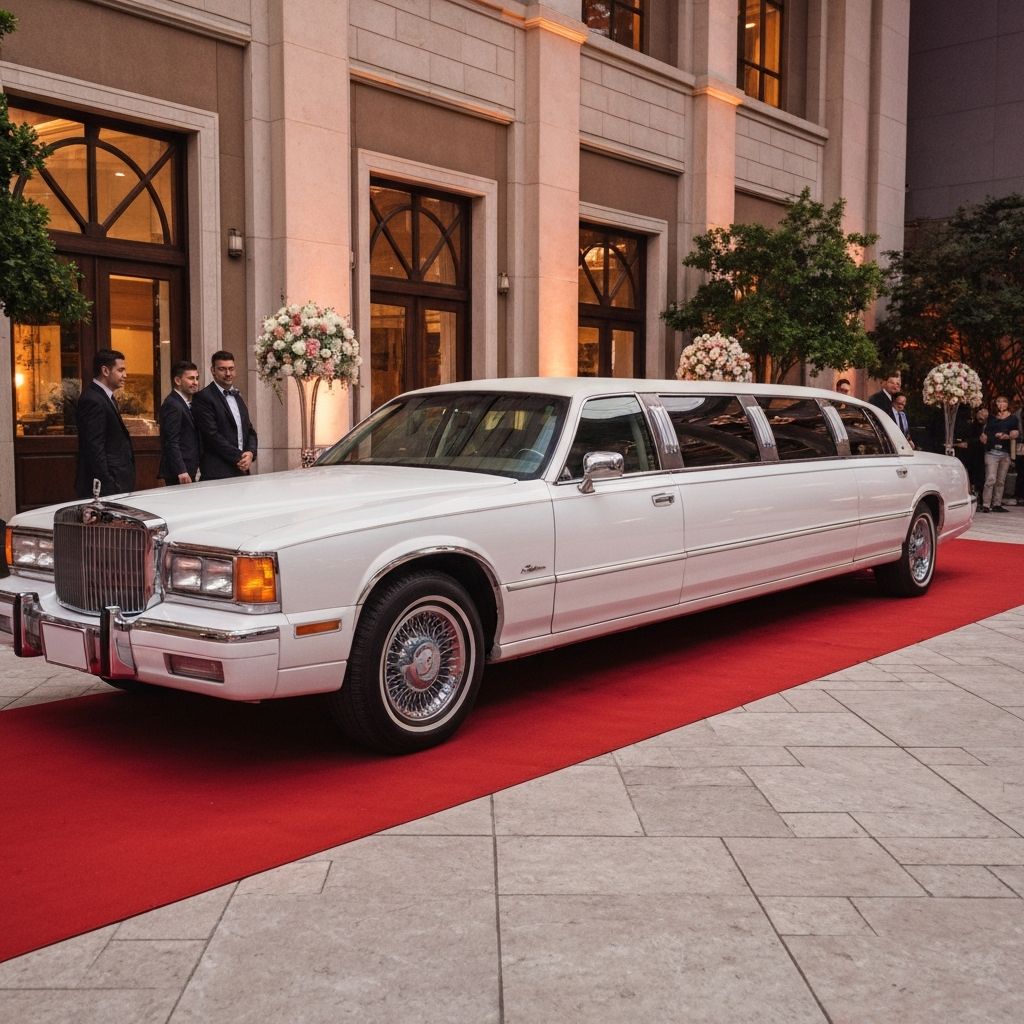
The short answer: plan the curb before you book the vehicle
For Toronto event transportation, confirm the practical pickup and drop-off plan before choosing a vehicle. A luxury SUV, Mercedes Sprinter, stretch limousine, or party bus may suit the group, but the booking only works when the vehicle can reach a sensible loading point, guests know where to meet, and the return pickup has its own plan.
Start with five decisions: the intended entrance, a backup meeting point, the direction vehicles will approach from, the time guests must be ready, and the person responsible for communicating a change. We can help review an itinerary before confirmation, but the final vehicle, route, timing, price, availability, and feasible loading arrangement depend on the specific booking and conditions on the day.
The goal is not to place a vehicle at the closest possible curb at all costs. The goal is to create a clear, safe, and usable handoff between guests, venue access, and the chauffeur. A pickup point that requires a short, well-explained walk can be more reliable than an entrance curb that is crowded, restricted, or difficult to approach.
- Primary arrival pickup point and the venue entrance guests should use.
- Separate departure pickup point, release time, and guest meeting instruction.
- Backup location in case the primary curb is unavailable or congested.
- Named organiser or group lead who can make and communicate a change.
- Current road closures, construction, traffic restrictions, and venue procedures.
| Planning item | Question to answer before booking |
|---|---|
| Arrival | Where can guests leave the vehicle and proceed to the correct entrance? |
| Departure | Where will guests assemble once the event ends? |
| Fallback | What nearby location will work if the intended curb cannot be used? |
| Communication | Who will send the final instruction and handle last-minute questions? |
Why Toronto venue access requires advance planning
Toronto venues can be affected by street activity, pedestrian queues, parking operations, transit movement, construction, security procedures, and temporary traffic controls. The City of Toronto’s event-planning guidance encourages organisers to review the event location, create a site map, and coordinate with relevant City divisions or agencies when an event is complex. Its guidance also highlights the need to consider neighbourhood impacts, parking disruptions, and event-specific requirements.
A private dinner, gala, concert outing, conference, festival, wedding, or sports event does not automatically require a street-event permit. However, it is still risky to assume a chauffeur can wait directly outside the front doors. Security staff, bollards, valet activity, delivery access, pedestrian volume, or an event-specific traffic plan may affect where a vehicle can stop and how long loading can take.
Ask the venue for current arrival guidance rather than relying only on a previous visit or an online map. Confirm the guest entrance, the suggested rideshare or chauffeur area if one exists, any restricted driveways, accessibility considerations, and the best contact for day-of coordination. If the venue cannot guarantee curb access, choose a recognizable nearby meeting point that does not depend on vehicles circulating repeatedly.
For a public event, it is also wise to think about the guest experience after leaving the vehicle. A plan that sends guests across a busy intersection, through an unclear security queue, or toward the wrong entrance creates avoidable stress. Build walking time and orientation time into the schedule, especially for formalwear, older guests, families with children, or guests carrying materials.
Check road closures and traffic conditions close to the event
Road conditions can change between the day transportation is reserved and the event date. The City of Toronto’s Road Restrictions and Closures service provides planned and unplanned restriction information. Its Traveller Information page explains that the City combines information from sources such as traffic cameras and the road-restrictions database to help travellers make decisions about timing and route.
Check the plan at three points: when building the initial itinerary, during the week before the event, and again on the event day. This routine matters because construction, collisions, weather, street events, demonstrations, races, and large crowds can change the practical approach to a venue even when the destination itself has not changed.
Do not treat a road closure check as a reason to promise an exact travel time. Use it to identify risk. If the usual approach is restricted, decide in advance which alternate side of the block or nearby intersection is easiest for guests to recognize. Tell guests that the backup point is part of the plan, not evidence that something has gone wrong.
For organiser-run events using public property or affecting streets, the City’s event resources and permit processes are especially relevant. Street-event requirements can involve notice periods, traffic management, and maintaining appropriate access. For a guest transportation booking, the practical lesson is simple: confirm the venue’s instructions and do not create a pickup plan that conflicts with event operations or emergency access.
- Review planned restrictions while setting the itinerary.
- Reconfirm venue instructions during the week of the event.
- Check current conditions before guests receive final pickup details.
- Use a fallback point that is easy to describe without relying on a changing landmark.
Separate the arrival plan from the departure plan
Many organisers plan the arrival carefully and treat the return as an afterthought. In practice, departure can be more complicated. Hundreds of people may leave at once, venue staff may redirect foot traffic, guests may finish conversations at different times, and a curb that worked earlier may become congested after the program ends.
For arrival, decide whether the vehicle should deliver guests near the entrance or use a calmer location where the group can walk together. Include time for security screening, coat check, registration, elevators, or finding the correct room. A group that arrives at the venue curb at the advertised start time may still be late to the event itself.
For departure, choose a pickup window and a release process. If everyone is leaving together, set an assembly time that is earlier than the vehicle’s target loading time. If guests may leave in waves, identify who is authorized to confirm that the group is ready. If the event has a reception or performance ending at an uncertain time, discuss the schedule clearly with us so the booking structure can be assessed before confirmation.
Guest instructions should be short enough to use while standing in a crowd. Include the meeting point, the time to be there, what to do if the curb changes, and the name or phone number of the group lead. Avoid vague directions such as “meet outside” or “look for the limo,” particularly at large venues with several exits.
| Arrival decision | Departure decision |
|---|---|
| Which entrance should guests use after unloading? | Which exit should guests use when gathering to leave? |
| Is there time for venue queues and walking? | What time must guests be assembled before loading? |
| Who greets or directs the group? | Who confirms the group is ready and communicates a fallback? |
Choose the vehicle around people, luggage, and movement
Vehicle selection should reflect the actual trip, not only the appearance of the vehicle. We can discuss luxury SUV, Mercedes Sprinter, stretch limousine, and party-bus options based on the requested itinerary, subject to confirmation. The useful comparison is not merely passenger count; it includes luggage, event materials, attire, mobility needs, walking distance, and whether the group needs to remain together.
A luxury SUV can be practical for a small executive group, family, couple, or airport-to-event transfer. A Sprinter may suit a larger group that wants to travel together or bring luggage and materials. A stretch limousine or party-bus option may fit a celebration where the ride is part of the occasion, but it still needs a workable loading area, realistic schedule, and confirmed itinerary.
Be conservative with the number of people expected to board at one time. Space for a passenger is not always space for a passenger in formalwear with a coat, bag, flowers, signage, or equipment. If the group will make multiple stops, list every stop in order and note whether each requires quick unloading, a longer wait, or a full group transfer.
If guests are arriving from different hotels or addresses, decide whether one central assembly point is better than several small pickups. Multiple pickups can be useful, but each stop adds coordination time and creates more chances for a delayed guest to affect the group. Our fleet information can help start the vehicle conversation, while the final selection should follow the confirmed passenger, luggage, and routing details.
Original planning tool: the curb-time calculation
Use a simple calculation to estimate how much coordination time the group needs at the curb: loading time equals the number of passengers multiplied by average boarding time, plus luggage handling, walking time, guest assembly time, and an access buffer.
For example, a 12-person group with an estimated one minute per person to board begins with 12 minutes. Add time if guests must walk from a backup location, gather after a venue exit, manage coats or luggage, or enter in separate waves. The result is not a guaranteed travel-time formula and should not be used as a promise of punctuality. It is a planning tool that prevents organisers from scheduling only the advertised drive time.
Use a larger buffer when the venue is unfamiliar, when guests are attending a high-volume public event, or when the group includes multiple households. The buffer should be visible in the itinerary rather than assumed. A written plan gives the organiser a clear answer when someone asks when they need to be at the meeting point.
- Passenger count multiplied by average boarding time.
- Plus luggage, coats, equipment, or accessibility needs.
- Plus walking time from the meeting point to the vehicle.
- Plus guest assembly and a realistic access buffer.
| Example input | Planning estimate |
|---|---|
| 12 passengers at about 1 minute each | 12 minutes of basic boarding coordination. |
| 5 additional minutes for bags and coats | 17 minutes before walking and access buffer. |
| 8-minute walk from fallback point | 25 minutes before adding the final buffer. |
Original planning tool: the three-zone pickup map
Before sending final instructions, mark three zones on a simple map or phone screenshot. Zone A is the primary loading point. Zone B is the guest waiting point. Zone C is the fallback point. Zone A may be the curb where the vehicle can load, while Zone B should be comfortable, visible, and easy for the full group to find. Zone C should be far enough from the main congestion to remain useful if the entrance area becomes blocked or redirected.
Write one plain-language sentence for each zone. For example: “Meet at the east entrance under the canopy.” “If the curb is restricted, walk to the north side of the hotel.” “The organiser will confirm any change by text.” This approach turns a complicated venue plan into instructions that guests can act on quickly.
Send the final version once the venue guidance, itinerary, and group contact are confirmed. Ask guests not to make their own curbside changes unless they contact the group lead. A single decision-maker reduces conflicting messages and helps keep the vehicle movement aligned with the group’s actual location.
If you are coordinating a game, tournament, or arena visit, review our sports transportation service for event-oriented planning context. For a broader vehicle comparison, review our fleet information, then contact us with the venue, guest count, and proposed timing. We can discuss the practical details before you submit a confirmed request.
The three-zone pickup map
Mark a primary loading point, a guest assembly point, and a fallback point before sending event instructions. Give each zone one clear sentence and name the person who can switch the group from the primary to the fallback location.
The curb-time calculation
Estimate loading coordination with: passengers multiplied by average boarding time, plus luggage handling, walking time, guest assembly, and an access buffer. Use it as a planning tool, not a promise of travel time.
Ready to coordinate your event itinerary? Use /book to request Toronto event transportation, or contact us at 647-386-3868 to discuss your venue, curbside plan, guest flow, and timing before confirmation.