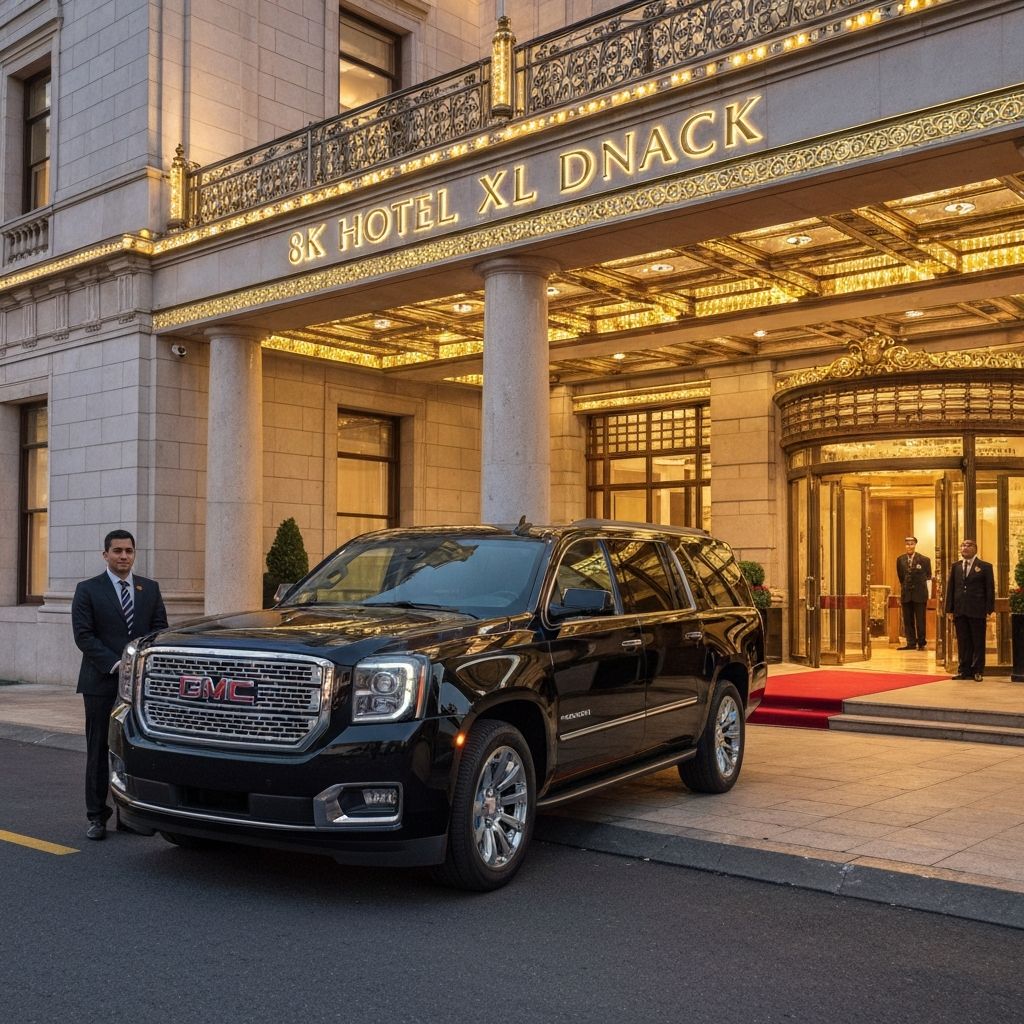
The short answer: choose based on itinerary complexity
For a simple Pearson-to-hotel or hotel-to-Pearson journey, start with the hotel shuttle and public-transit options. A shuttle can be a sensible choice when its operating hours match your flight, its pickup procedure is clear, and everyone can manage the luggage allowance. Public transit can be practical for travellers with light bags, a convenient station connection, and room in the schedule for transfers.
A taxi or rideshare can suit a spontaneous, one-destination trip. A pre-arranged private chauffeur becomes more useful when the trip has dependencies: a fixed pickup window, several travellers, substantial luggage, a meeting after hotel check-in, more than one address, a private-jet schedule, or a planned return to the airport. In those situations, the benefit is coordination rather than a generic luxury claim. We offer reservation-based hotel, airport,
- Simple hotel-airport journey: compare the hotel shuttle and transit route first.
- Heavy luggage or a group: assess real luggage space, not passenger count alone.
- Meetings, events, and multiple stops: prioritize a clear plan and confirmed instructions over the lowest shown
| Option | Usually works best for | Main trade-off |
|---|---|---|
| Hotel shuttle | One airport and one participating hotel during published operating | |
| UP Express and connecting transit | Light luggage, convenient station access, and flexible timing | Transfers, walking, and service changes must be built into the plan |
| Taxi or rideshare | A point-to-point trip arranged near departure | Vehicle fit and pickup coordination can vary by trip. |
1. Hotel shuttles: convenient, but confirm the operating details
Hotel shuttle service is not one standardized product. Every hotel establishes its own hours, pickup process, reservation requirements, route, and baggage policy. Toronto Pearson directs travellers to contact individual hotels for reservations, rate information, and transportation details. The airport lists hotel-shuttle pickup locations at Terminal 1 Arrivals Level, Door E, and Terminal 3 Arrivals Level, Doors B and G.
That means a hotel shuttle should be evaluated as a specific service, not assumed to be an automatic curbside ride. Some properties run a timetable; others dispatch a shuttle after the guest calls. Some serve only check-in and check-out trips, while others may have limits on luggage, party size, or service coverage. An early departure, delayed arrival, oversized bags, or a child stroller can change whether the shuttle remains the easiest option. Ask the
- Is the shuttle scheduled, on-call, or first-come, first-served?
- Must an arriving guest call the hotel after collecting luggage?
- What is the last departure or pickup time relevant to your flight?
| Question for the hotel | Why it matters |
|---|---|
| What are the service hours for my travel date? | Published service may not cover a late arrival or early departure. |
| Where exactly do I wait at Pearson? | Terminal and door details reduce uncertainty after baggage claim. |
| Can the shuttle handle our luggage and special items? | A compact shuttle may not suit oversized bags, strollers, or mobility |
2. Public transit: practical when the complete journey is simple
UP Express connects Pearson with Union Station and also stops at Weston and Bloor. Its official schedule information describes a 28-minute trip between Pearson and Union under the standard schedule, with trains generally scheduled every 15 minutes. Schedules can change, so travellers should check the current departure information and service notices before leaving the hotel or airport.
Transit is often a good fit for a solo traveller or couple staying near Union Station, Bloor, Weston, or an easy onward connection. It can be less convenient when the final hotel requires a second train, streetcar, bus, or a long walk with cases. The train segment is only part of the journey: include the time needed to leave the terminal, find the station, wait for the train, transfer, reach the hotel entrance, and complete check-in. This distinction is
- Measure door-to-door time rather than only the airport-to-Union train time.
- Check live departures, service alerts, and the last train before relying on transit.
- Allow additional time for elevators, transfers, children, and luggage handling.
| Transit question | Practical test |
|---|---|
| How many transfers are involved? | A direct or single-transfer route is different from several platform |
| How far is the hotel from the final station? | Consider the walk, weather, curb access, and bags. |
| Is the travel window flexible? | Transit is strongest when a modest delay does not disrupt a meeting or |
3. Taxi or rideshare: flexible for a single destination
Taxi and rideshare options can be useful when you need one ride soon and the itinerary has a clear destination. Pearson states that arriving passengers do not have to pre-book a taxi or limo, although they may arrange one in advance. For pre-arranged taxis and limousines, the airport identifies Door A at Terminal 1 and Door A at Terminal 3 as the designated pickup areas. Pearson also lists Uber, Lyft, and Hopp as rideshare pickup options.
The main consideration is not whether a car is available in principle; it is whether the ride fits the entire trip. A last-minute request can be perfectly reasonable for one person travelling directly to a hotel. It may be less practical for a family with many cases, an executive with a fixed meeting sequence, or a group trying to keep everyone together. In those cases, confirm the passenger count, luggage, child-seat needs, terminal, final address, and
- Confirm the terminal and the appropriate pickup instructions before requesting a ride.
- Do not assume a standard car will carry several large suitcases or bulky equipment.
- For a group, assign one person to verify the booking and passenger count.
| Situation | What to clarify before travel |
|---|---|
| Family with luggage | Number and type of bags, child seating needs, and practical vehicle |
| Executive schedule | Pickup address, wait instructions, meeting order, and return plan |
| Late arrival | Arrival status, luggage collection timing, and the provider's contact |
4. When a private chauffeur is the better planning tool
A private chauffeur is most useful when transportation has to work as one coordinated itinerary. Examples include an airport arrival followed by hotel check-in and a client meeting, a wedding party travelling between hotels and venues, a family making several errands before reaching the hotel, or a private-jet transfer tied to a fixed departure window. These trips create dependencies that a sequence of separate, on-demand ride requests may not address well
The practical value is the ability to present the complete request in advance: pickup point, destination, intermediate stops, number of passengers, luggage, flight or event timing, and return requirement. We can review that information while confirming availability for the requested date, route, and vehicle. Our hotel, airport, corporate, private-jet, SUV, and Sprinter service categories are designed for travellers who need an organized reservation rather
- A fixed schedule matters more than finding the lowest initial fare.
- Passengers need to travel together instead of arranging separate cars.
- Several stops make repeated booking and pickup coordination inconvenient.
| Planning need | Why pre-arrangement may help | What still requires confirmation |
|---|---|---|
| Multiple stops | The full itinerary can be reviewed before travel. | Routing, stop duration, availability, and pricing. |
| Large or mixed luggage | The request can include bags and special items before vehicle | |
| Airport arrival | Flight and terminal details can be recorded in the reservation. | Meeting instructions and the applicable airport pickup procedure. |
5. Passenger and luggage fit: use a simple booking brief
Do not select transportation by passenger count alone. Two people carrying four large checked cases may need more usable cargo room than four people with small carry-ons. Count adults, children, checked bags, carry-ons, garment bags, golf equipment, strollers, mobility aids, pet carriers, and items that cannot be folded or stacked. Give that list to the transportation provider before the vehicle is confirmed.
A helpful formula is: passengers plus luggage and special items plus pickup point plus destination plus intermediate stops plus flight or event timing plus return plan. This is not a vehicle-capacity guarantee. It is a way to give accurate information early enough for a provider to discuss practical fit. Pearson specifically advises passengers who need transport for a non-folding or non-collapsible mobility aid to contact their chosen company directly. The
- List adults, children, and anyone needing extra boarding time.
- Separate checked bags, carry-ons, garment bags, and oversized items.
- Mention wheelchairs, non-folding mobility aids, strollers, pets, or equipment.
| Example load | Useful booking description |
|---|---|
| Two travellers, two checked bags, and two carry-ons | Two passengers with four standard bags total. |
| Five travellers, seven bags, and one stroller | Five passengers, seven bags, and one stroller; please confirm |
| Four travellers with two golf bags and four suitcases | Four passengers with four suitcases and two golf bags; please confirm |
6. Airport pickup logistics at Pearson
Airport pickup becomes easier when a reservation contains exact details. Provide the airline, flight number, arrival date, passenger name, mobile number, luggage estimate, and the hotel's complete name and address. Ask what to do after collecting bags, where to go, and whether the driver or dispatcher will send further instructions. A clear contact method is especially important if the flight, baggage collection, or border process takes longer than
Pearson advises travellers using pre-arranged services to plan ahead, contact the transportation company, and go to the designated pickup area upon arrival. The designated areas for pre-arranged taxis and limousines are Terminal 1 Door A and Terminal 3 Door A. Hotel-shuttle locations differ, so do not use the pre-arranged-limo meeting point for a hotel shuttle unless the hotel specifically directs you there. Confirm the instructions attached to your actual
- After landing, clear required formalities, collect luggage, and follow the confirmed instructions.
- If a flight is delayed, use the reservation contact method instead of assuming the plan has changed.
- At the hotel, ask about the loading point, valet procedures, and the best entrance for pickup.
| Booking field | Example information |
|---|---|
| Pickup | Pearson Terminal 1, arriving flight, after baggage collection. |
| Destination | Hotel name, street address, and entrance or valet instructions. |
| Return | Hotel pickup date and time, airline, terminal, and planned airport |
The three-question hotel transfer test
1. Is this one simple trip or a linked itinerary? 2. Can every passenger and bag fit comfortably in the option being considered? 3. Who is responsible for coordinating the pickup if the arrival, meeting, or return timing changes? If the answers involve several stops, uncertain luggage, or a shared schedule, compare a pre-arranged chauffeur alongside the hotel shuttle, transit, taxi, and rideshare options.
The booking brief formula
Write the request as: passengers plus luggage and special items plus pickup point plus destination plus intermediate stops plus flight or event timing plus return plan. Example: Four passengers, six checked bags, two carry-ons, Pearson Terminal 3 to a downtown hotel, two meeting stops, arriving flight details, and return to Pearson the following morning. This gives the operator the information needed to discuss fit and confirmation requirements.
For hotel, airport, corporate, SUV, Sprinter, or private-jet transportation in Toronto and surrounding Ontario communities, visit our hotel transportation service or use /book to request a confirmed reservation and quote. You may also call Toronto A1 Limo at 647-386-3868.